Opposing the Rescission of the 2001 Roadless Rule
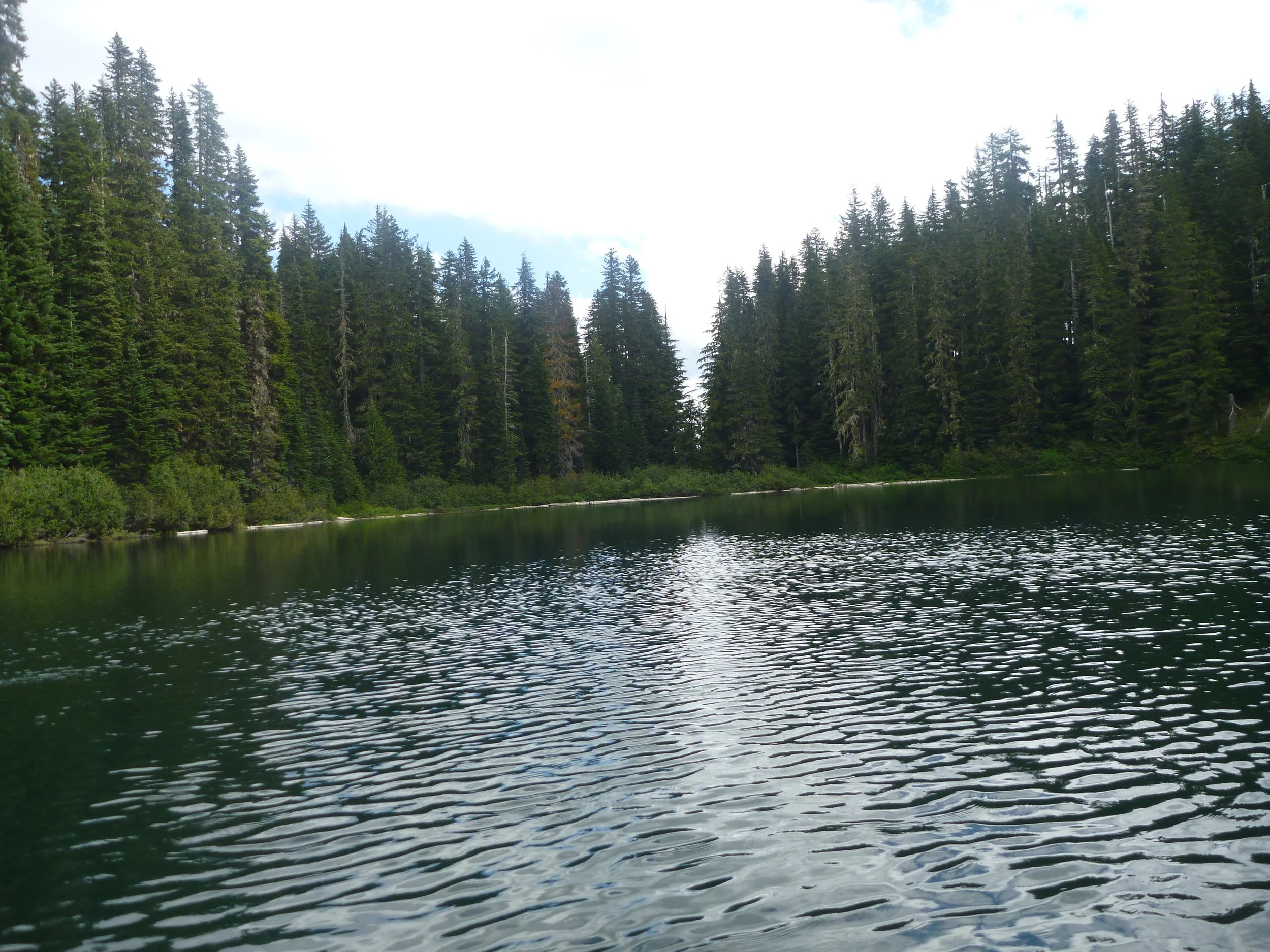
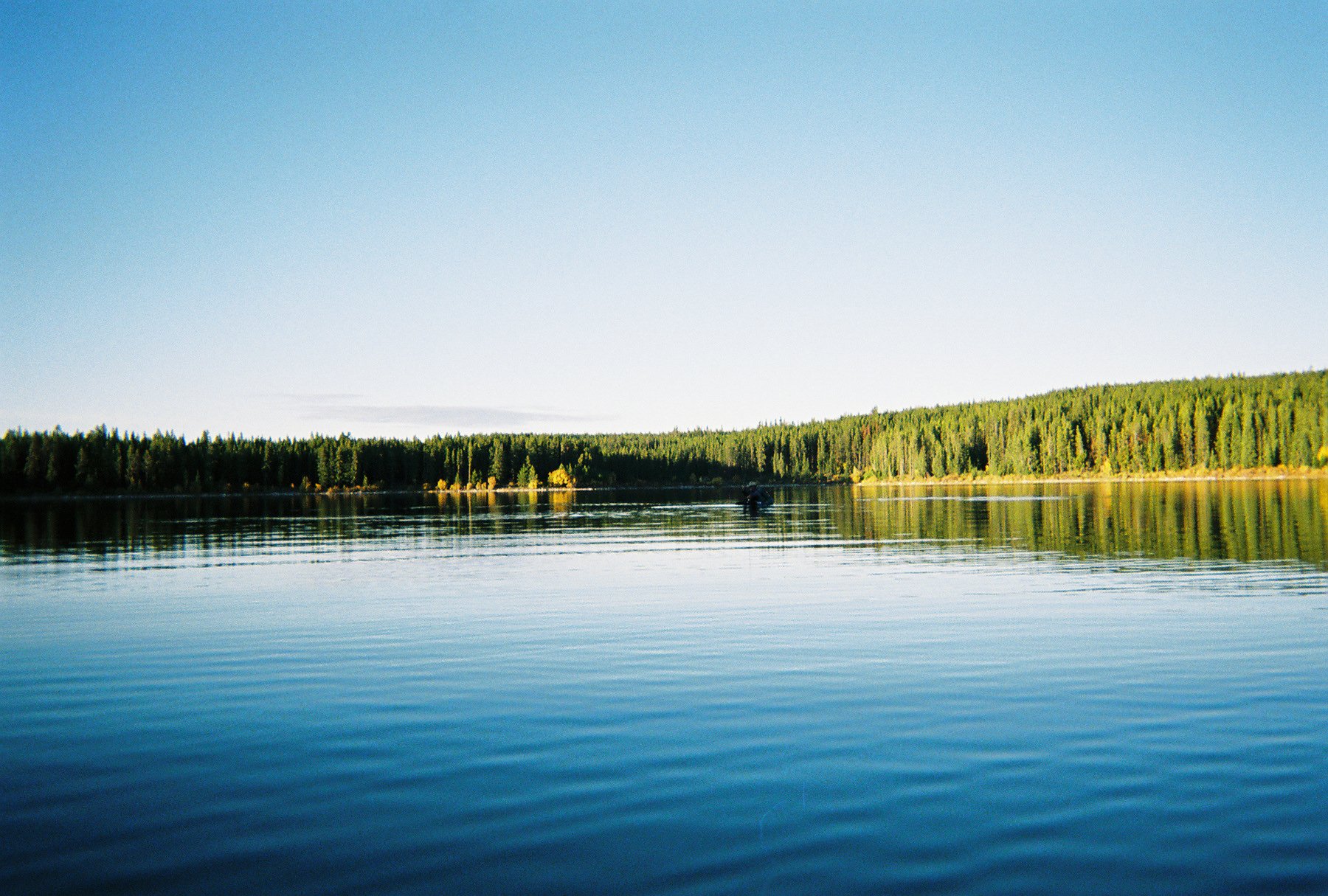
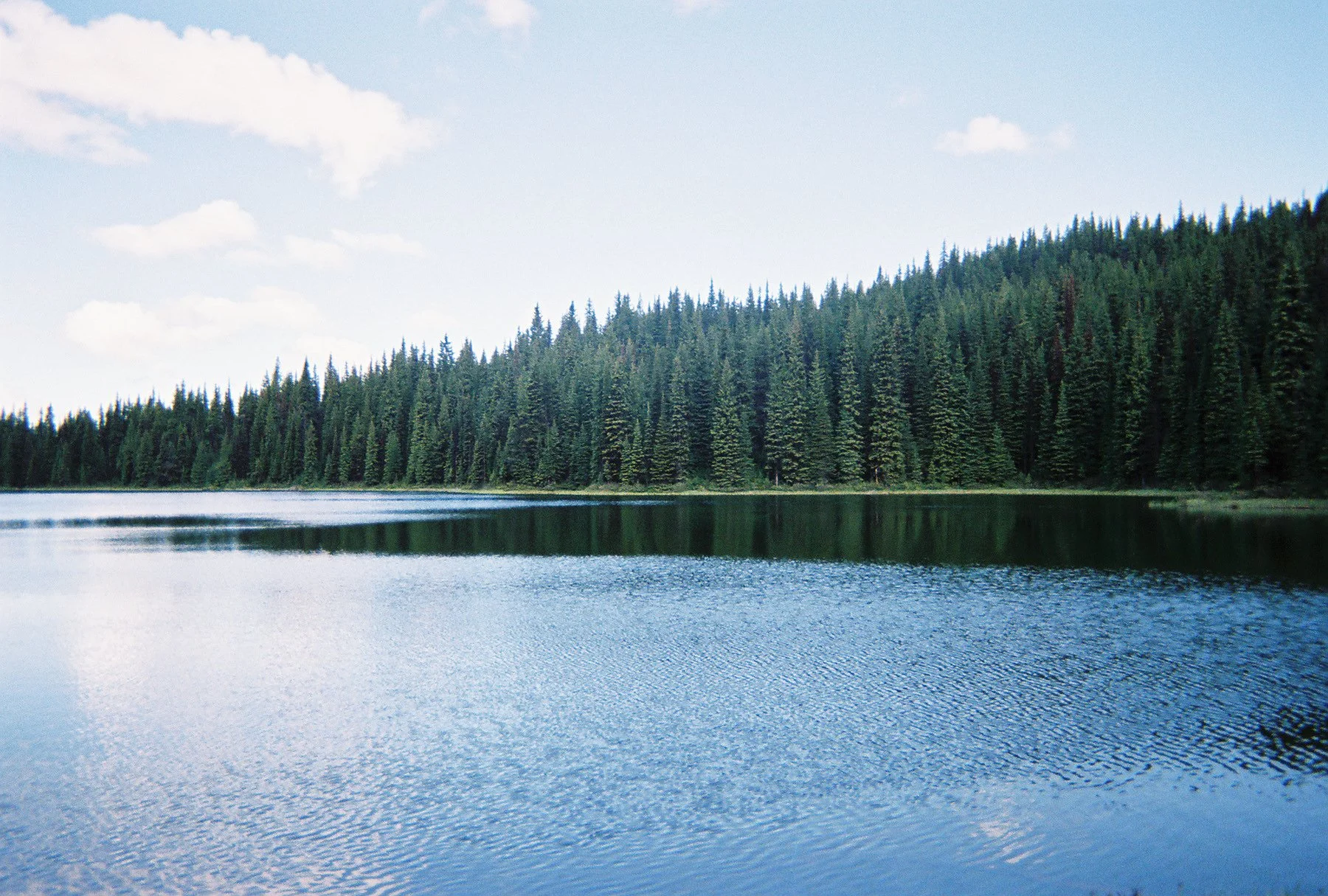
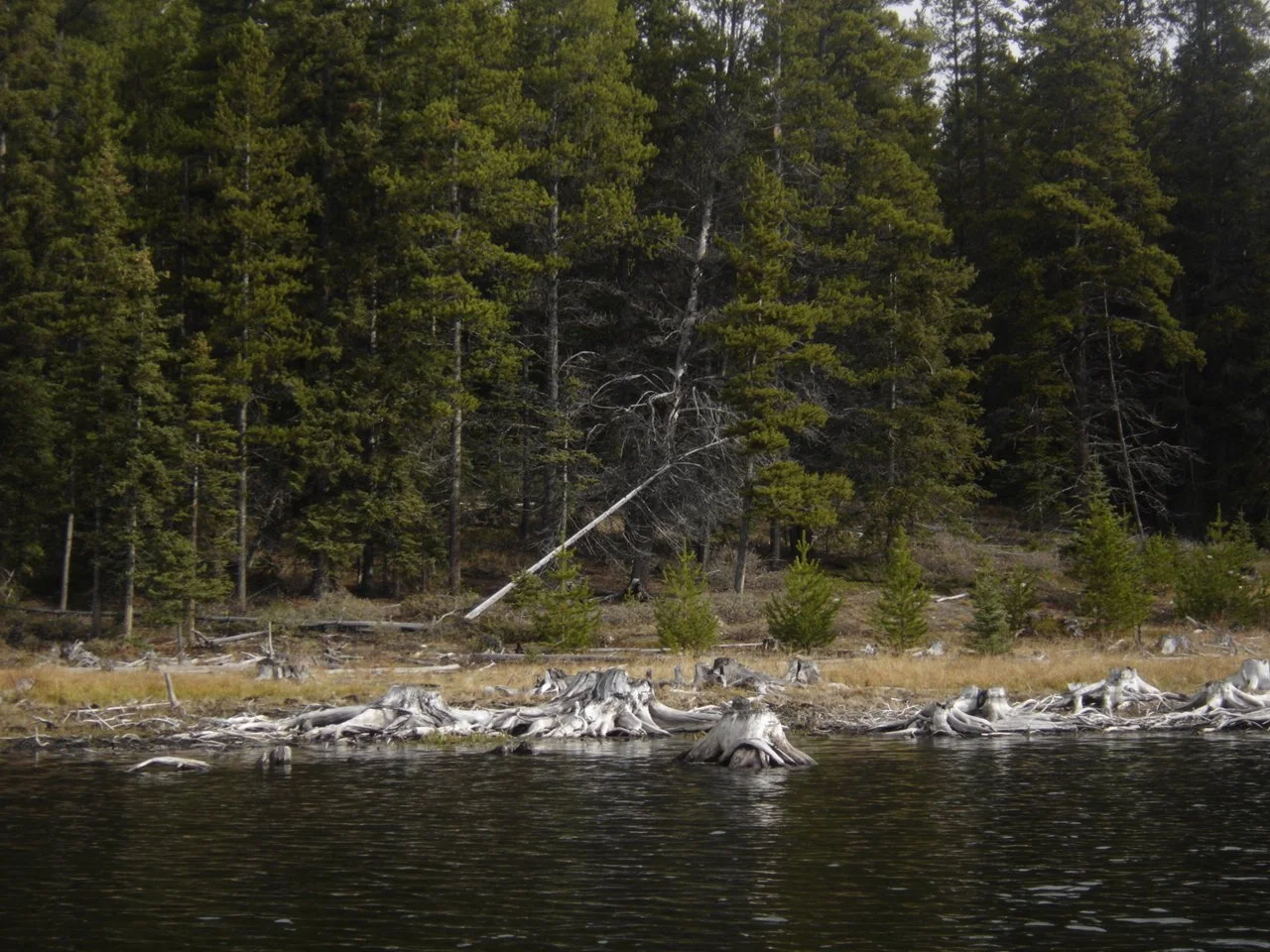
This is Goose Lake — a popular recreation spot in the Gifford Pinchot National Forest, near the Columbia River Gorge in Skamania County, Washington. Just south of it sits an Inventoried Roadless Area (IRA), protected from road-building and resource extraction under the 2001 Roadless Rule.
I've fished and hiked through IRAs across the Pacific Northwest for over 40 years. The Roadless Rule was good policy: it protected critical habitat for salmon, steelhead, marbled murrelets, and spotted owls. The timber left in these steep, upper-watershed areas was worth little; we'd already logged the accessible stuff. Twenty-five years ago, we chose to conserve 58 million acres of public land at almost no real cost.
Now that's on the table again. A proposed rescission of the Roadless Rule would open these lands to development, justified by rural economic growth and fire suppression while admitting, upfront, unavoidable (and unstudied) harm to already-endangered salmon and steelhead. The payoff: about $10 million in additional revenue to public coffers.
Below are the comments I submitted opposing the rescission, drawing on my experience both as a rural economic developer in the Pacific Northwest and as a conservationist. Fair warning: it's long and detailed, because the stakes are too. Or just skip it and picture the photos above as historical relics.
Public Comment · Federal Rulemaking Record
My Submitted Comments
On the rescission of the 2001 Roadless Rule — submitted in opposition, on economic and fisheries grounds.
Docket No. FS-2025-0001 · RIN 0596-AD66
Objection: Incongruence between the rescission and its stated rural economic development justification, and unaddressed adverse effects to ESA‑listed fisheries.
Statement of Interest and Professional Basis for Comment
- Thirty years as an economic development professional serving rural and tribal communities in the Pacific Northwest timber region.
- Direct, hands-on experience helping communities and small businesses respond to the timber-industry contraction of the 1980s–90s — the last time a shift in federal timber policy was framed as an economic turning point for these communities.
- Led and supported small-log harvesting and processing retooling efforts — the practical, on-the-ground work of helping mills and communities adapt to a changed resource base, as distinct from policy debates about acreage access.
- This comment is submitted from that vantage point: not as a general objection to timber policy, but as a professional assessment of whether this specific rule will do what it says it will do for the communities I have spent a career serving.
Independent of that professional background, this comment also raises a second, separate objection grounded in the agency’s own environmental compliance record: its Draft Biological Assessment for NMFS-regulated species already concludes that the proposed rescission is likely to adversely affect ESA-listed Pacific salmon, steelhead, and their designated critical habitat, without providing a rule-level cumulative effects analysis to accompany that finding.
Summary of Objection
The Draft EIS and accompanying Economic Analysis justify rescinding the 2001 Roadless Rule substantially on the grounds of rural economic development — more acreage nominally available for harvest, framed as revenue and jobs for timber-dependent communities. The economic record assembled in this comment (see Section III, keyed to the “Flagged Issues” documentation) shows this justification does not hold up against the actual, well-documented structural condition of the regional timber economy. The rule targets the wrong constraint. Acreage access was not the binding constraint on rural timber economies in the 1990s and it is not the binding constraint today. Select data and charts are appended in support.
Separately, and on independent grounds, the agency’s own Draft Biological Assessment for NMFS species (Section IV, below) already determines that the proposed action is “likely to adversely affect” ESA-listed salmonids and their designated critical habitat nationwide, while deferring all cumulative-effects analysis to individual future project consultations that the agency admits it cannot yet identify, locate, or schedule. Both objections independently support the same request: that the agency not finalize this rescission on the current record.
Economic Grounds for Objection
A. The economic case for rural benefit is not verifiable as presented
- The Draft EIS and CBA/RFA express the projected harvest increase only in dollars ($5.2–11.4M/yr Forest Service revenue; $4.6–10.6M/yr industry revenue) and a national percentage (5–10%) — no board-foot or MBF volume figure is disclosed, despite the analysis clearly being built on such an analysis. Request the underlying volume data before this justification can be evaluated on its merits. [Flagged Issue #1]
- No state-level or regional breakdown is provided anywhere in either document — Washington appears only in decades-old historical context. There is no way to verify what this rule would mean for any specific state, region, or community, including the ones this comment represents. [Flagged Issue #2]
B. The revenue mechanism does not reach the communities the rule claims to help
- The CBA states explicitly that Secure Rural Schools Act payments — the primary mechanism by which timber revenue historically reached rural counties — are locked to a fixed FY1986–99 formula and would not change under this rule. The “rural economic development” framing depends on a revenue pathway the agency’s own analysis says will not move. [Flagged Issue #3]
C. Much of the claimed opportunity does not exist without further agency action
- 66.5% of the potentially affected roadless acreage (26.7 of ~40 million acres) is already restricted from harvest under existing forest plans, independent of the Roadless Rule. Rescission alone does not open this land; it requires separate plan amendments not before the agency in this action. The topline acreage and dollar figures materially overstate the near-term opportunity. [Flagged Issue #4]
D. The regional timber-processing base has structurally collapsed and changed in type — independent of roadless-area policy — and this is the central fact my professional experience confirms
- Washington has lost roughly two-thirds of its sawmills since 1990 (106 → 37–47); Oregon has lost well over half since the late 1980s (165 → ~69). This is the same contraction I spent the 1990s and 2000s helping communities respond to — driven by Northwest Forest Plan implementation, private-land supply shifts, and consolidation into fewer, larger, more mechanized mills, not by the Roadless Rule. [Flagged Issue #7]
- The mills that remain are overwhelmingly retooled for small-diameter, young-growth logs — in Oregon, only 3–8% of surviving mills can still process large-diameter/old-growth timber. I personally supported this retooling transition in the communities I served; it is not reversible on the timescale or terms this rule assumes, and the EIS does not address whether “operable acres” opened by rescission match the wood the surviving milling base can actually process. [Flagged Issue #7]
- Combined WA+OR timber-sector employment fell 50% (70,100 → 34,900 jobs, 1990–present) and harvest volume fell 65% (15,660 → 5,410 MMBF, 1988–2023) — both driven by factors that predate and are independent of the Roadless Rule. [Flagged Issue #8]
- Pulp and paper mills show the identical pattern: combined WA+OR mill count fell from ~52–53 (1990) to ~27–28 (2016–17), with sector employment falling even faster — 56% (25.4k → 11.2k jobs) over a comparable span. [Flagged Issue #11]
E. Even a full restoration of historical harvest volumes would not restore historical employment — the theory of change underlying the rescission is economically obsolete
- Jobs supported per million board feet harvested have fallen from a combined 5.81 (1990) to levels well below the late-1990s peak of 7.73, driven by mechanization and consolidation rather than harvest volume itself — a dual-axis analysis shows the labor-intensity ratio and harvest volume moving independently, at points in opposite directions, ruling out the simple explanation that less harvesting caused fewer jobs. [Flagged Issue #9]
- The same pattern holds using actual lumber production rather than raw harvest: production is down only 32% from its 1987 peak while jobs per unit produced have fallen further in relative terms — confirming that technology and efficiency gains, not swings in timber supply, are the primary driver of the sector’s employment decline. [Flagged Issue #10]
- Applied to this rule’s own numbers: the EIS’s projected 5–10% national harvest increase, at current labor-intensity ratios, would translate into only a small fraction of the jobs that a comparison to 1990s-era harvest-to-employment ratios might imply. The rule’s implicit economic model — more acres cut equals proportionally more rural jobs — does not match how this industry now operates, and has not for at least fifteen years.
F. The proposal does not address agency capacity or verify its own cited savings
- The Forest Service is concurrently facing a proposed FY2026 budget reduction of approximately $1.086 billion, raising a direct question about whether the agency can responsibly plan, monitor, and enforce expanded management activity in newly accessible roadless areas. [Flagged Issue #5]
- DOGE-attributed savings claims cited in adjacent public discussion of Forest Service funding have not been independently verified by GAO for USDA/Forest Service specifically, and should not be treated as established fact in this rulemaking record. [Flagged Issue #6]
Fisheries Grounds for Objection: The Agency’s Own Biological Assessment Already Concludes Adverse Effects to ESA-Listed Salmon and Steelhead
Statement of Personal Interest and Experience
Separate from my professional background in Section I, I raise this section as a lifelong outdoorsman, hiker, and fly fisher with direct, firsthand experience in the areas this rescission would affect.
- I have hiked and fished throughout Washington and Oregon for decades, including in inventoried roadless areas that would be affected by this rescission. I know these areas firsthand, not from maps or secondhand accounts.
- I have been actively involved in fisheries conservation and restoration work in this region, including the restoration of Washington’s Elwha River, instream habitat restoration for endangered salmon and steelhead on Washington’s Olympic Peninsula, and efforts to increase public access to streams and lakes.
This comment’s fisheries objection is therefore grounded both in the agency’s own Biological Assessment findings, addressed below, and in direct personal experience with the fish, streams, and roadless terrain the proposed rescission puts at risk.
This objection stands independently of the economic grounds above. It is based entirely on the Forest Service’s own Draft Biological Assessment for NMFS-regulated species (“Draft Biological Assessment NMFS Species,” USDA Forest Service, Aug. 14, 2026), prepared as part of the same rulemaking record.
A. The agency’s own determination: rescission is “likely to adversely affect” listed salmonids and their critical habitat nationwide
In its Conclusion/Determinations section, the Biological Assessment states:
“For all the salmonid species, we determined there could be measurable effects with future projects with the action area, therefore, future projects may affect, likely to adversely affect salmonids and their critical habitat.”
BA, Conclusion/Determinations, p. 94
…with a narrow exception for two designated critical habitat units located entirely outside the action area. “Likely to adversely affect” (LAA) is the Endangered Species Act Section 7 determination that triggers formal consultation — it reflects the agency’s own considered judgment that harm to federally listed fish is the expected outcome of the action, not a remote or speculative possibility. The Biological Assessment separately reaches the same LAA conclusion for eulachon and eulachon designated critical habitat. [Flagged Issue #12]
B. The stated mechanism of harm, in the agency’s own words
The Biological Assessment identifies the same causal pathways that link road construction and timber harvest in currently roadless terrain to fisheries harm:
“Sediment and turbidity tend to be the most frequent effects associated with timber harvest tasks, road maintenance and reconstruction and road construction… Even with minimization measures, sedimentation and turbidity could reach measurable effects for any given project… these effects should be low level effects but would still reach a level of significance to [listed fish habitat].”
BA, pp. 92–93
“Failures of road fill at stream crossings are common source areas for landslide and debris torrents.”
BA, p. 93
— a risk concentrated on the steep, currently unroaded terrain that the Biological Assessment’s own operability analysis shows makes up a substantial share of the affected roadless acreage.
“Legacy roads on Forest Service lands are the largest contributor to habitat fragmentation of salmonids… all new roads would continue to have negative effects to salmonids for as long as they are in place.”
BA, p. 91
On stream temperature, the Biological Assessment’s conclusion of “minor” effects is explicitly conditioned on riparian buffers that have not yet been designed or committed to:
“Since specific buffers are unknown for now, this analysis assumes there could be projects that will have limited stream protection buffers and therefore have effects on stream temperature.”
BA, pp. 82–83
This is the same pattern already identified in the economic analysis (Section III.A above): a favorable outcome is assumed based on mitigation measures the agency has not yet defined or committed to, rather than disclosed and analyzed on their actual, specified terms.
C. No rule-level cumulative-effects analysis exists — it is deferred entirely to unspecified future project consultations
The Biological Assessment’s Cumulative Effects section is, in its entirety, two sentences:
“Cumulative effects will be considered more thoroughly during project level consultation.”
BA, p. 102
Immediately following, the Biological Assessment states the agency…
“does not have a reliable method to identify, describe, or analyze the likelihood and location of any future projects that may be proposed for currently inventoried roadless areas.”
BA, p. 102
In other words, a programmatic decision to rescind roadless protection across 44.7 million acres nationwide is being made without any aggregate, landscape-scale quantification of expected sediment delivery, stream-temperature change, or habitat fragmentation effects. That analysis is pushed entirely into individual future project-level consultations that, by the agency’s own admission, cannot yet be identified, located, or scheduled. This mirrors the analytical gap already identified on the economic side of the record (Section III.A, III.C above): a national-scale action supported by aggregate figures on the benefit side, but only a qualitative admission of “likely” harm on the fisheries side, with no comparable aggregate analysis.
D. Requested correction specific to the fisheries record
Before finalizing this rescission, the agency should quantify projected sediment delivery and stream-temperature change by watershed (HUC) for the roadless acreage its own analysis identifies as operable; disclose which of those operable watersheds contain ESA-listed salmonid populations or designated critical habitat; and provide an aggregate, rule-level cumulative-effects analysis consistent with NEPA’s requirement to disclose cumulative impacts at the scale of the action itself — rather than deferring that analysis entirely to individual, not-yet-identified future projects.
Professional Assessment: What Actually Stabilizes Rural Timber-Dependent Economies
Having done this work for thirty years, the constraint that determined whether a rural or tribal community weathered the 1980s–90s timber transition was rarely the number of acres nominally available to cut. It was milling capacity and its match to the available wood supply, workforce transition capacity, access to retooling capital, market diversification beyond raw log/green lumber, and the stability of the community revenue mechanisms (like SRS) that let local governments plan through a transition. This rule addresses none of those actual constraints. It proposes to change the acreage variable while leaving untouched the structural conditions — collapsed milling capacity, a smaller and differently-skilled workforce, an unrepaired SRS linkage — that will determine whether any resulting harvest increase reaches rural communities at all.
Requested Agency Actions
- Disclose the underlying timber-volume (MBF) data and state/regional allocation the economic analysis is built on, so the rural-benefit claim can be independently evaluated. → III.A
- Provide an analysis of current regional milling capacity — including small-log vs. large-log processing capability — against the size/species characteristics of the timber the rule would newly make available, to establish whether the existing processing base can actually capture the projected volume. → III.D
- Provide a labor-market impact analysis using current, empirically observed labor-intensity ratios rather than historical harvest-to-employment relationships that no longer hold. → III.E
- Correct the rural economic development narrative to accurately reflect that Secure Rural Schools payments will not increase under this rule, and identify what alternative mechanism, if any, would route additional revenue to affected counties. → III.B
- Address Forest Service capacity to manage expanded roadless-area access given concurrent, substantial proposed budget reductions. → III.F
- Withdraw or independently verify any DOGE-derived savings figures relied upon in related agency communications about this rulemaking. → III.F
- Provide a quantified, rule-level cumulative-effects analysis of expected sediment delivery, stream-temperature change, and habitat fragmentation by watershed for the roadless acreage identified as operable, rather than deferring this analysis entirely to future, unidentified project-level consultations. → IV.C
- Disclose which operable watersheds overlap ESA-listed salmonid populations or designated critical habitat, and do not finalize a “minor effects” conclusion on stream temperature without specifying the riparian protection measures that conclusion assumes. → IV.B, IV.D
Conclusion
The rescission of the 2001 Roadless Rule is justified substantially on rural economic development grounds that are incongruent with the documented, structural condition of the regional timber economy. As a professional who has spent thirty years helping these same communities adapt to exactly this kind of contraction, I do not believe this rule’s theory of change — that increased acreage access will meaningfully restore historical timber-sector jobs and revenue — reflects how this industry and the economies of rural communities in the Pacific Northwest have actually operated for the past three decades.
Independently, the agency’s own Draft Biological Assessment for NMFS species already concludes that this action is likely to adversely affect ESA-listed Pacific salmon, steelhead, and their designated critical habitat nationwide, and does so without any rule-level cumulative-effects analysis to accompany that finding — deferring that analysis entirely to future project consultations the agency admits it cannot yet identify or locate.
On both grounds, I request that the agency not finalize this rescission on its current record, and that it address the specific gaps identified above before proceeding.
Respectfully submitted,
Bart Phillips
August 27, 2026
References
Sources underlying the numbered [Flagged Issue #] cross-references above, corresponding to the full research documentation compiled in support of this comment:
- Flagged Issues #1–2 (timber volume and state-level disclosure): U.S. Forest Service, Draft Environmental Impact Statement, Rescission of the 2001 Roadless Rule, Docket No. FS-2025-0001, Volume I; U.S. Forest Service, Economic Analysis (Regulatory Flexibility Act and Cost-Benefit Analysis), Docket No. FS-2025-0001.
- Flagged Issue #3 (Secure Rural Schools payments): U.S. Forest Service, Economic Analysis (RFA and CBA), Docket No. FS-2025-0001 (Secure Rural Schools Act payment formula discussion).
- Flagged Issue #4 (acreage already foreclosed by existing forest plans): U.S. Forest Service, Draft EIS Vol. I and Economic Analysis (RFA and CBA), Docket No. FS-2025-0001.
- Flagged Issue #5 (agency budget reductions): FY2026 President’s Budget Request (Office of Management and Budget), USDA Forest Service appropriations detail.
- Flagged Issue #6 (DOGE savings claims): U.S. Government Accountability Office, GAO-26-108615, audit of DOGE “Wall of Receipts” claimed savings (August 2026).
- Flagged Issue #7 (sawmill decline and product-type shift): Washington State Department of Natural Resources, Mill Surveys (1990, 2002, 2016); Oregon Forest Resources Institute, 2019 Forest Sector Economic Report, Table 6; University of Montana Bureau of Business and Economic Research, Forest Industry Data Collection System (FIDACS), Washington 2020 tables; PolitiFact, Seneca Jones fact-check (March 2014); University of Washington CINTRAFOR, Washington’s Sawmilling Sector Analysis.
- Flagged Issue #8 (employment and harvest volume decline, 1990–2023): U.S. Bureau of Labor Statistics, Current Employment Statistics, NAICS 321 Wood Product Manufacturing, via FRED (series SMU41000003132100001A, SMU53000003132100001A); Oregon Department of Forestry, “Oregon’s Timber Harvests: 1849–2004”; Washington DNR, “Timber Harvest Summary — All Ownerships” (1965–2002); University of Montana BBER Forest Industry Research program.
- Flagged Issue #9 (labor intensity ratio, jobs per MMBF): Derived analytical construct built from the Flagged Issue #8 sources above (BLS CES NAICS 321 via FRED; Oregon Department of Forestry and Washington DNR harvest series; University of Montana BBER).
- Flagged Issue #10 (lumber production and efficiency gains): Western Wood Products Association lumber production statistics, as compiled in USDA Forest Service Pacific Northwest Research Station, “Production, Prices, Employment, and Trade in Northwest Forest Industries: 1958–2023,” Table 2; U.S. Bureau of Labor Statistics, Current Employment Statistics (NAICS 321) via FRED.
- Flagged Issue #11 (pulp and paper mill decline): Washington DNR Mill Survey series; Oregon Forest Resources Institute 2019 Forest Sector Economic Report, Table 6; USDA Forest Service PNW Research Station, PNW-GTR-997, Table 19; Northwest Pulp & Paper Association member profiles; Washington State Recycling Association industry presentation (2018–2019); U.S. Bureau of Labor Statistics, Current Employment Statistics (NAICS 322) via FRED.
- Flagged Issue #12 (Biological Assessment findings on ESA-listed fisheries): U.S. Forest Service, Draft Biological Assessment, NMFS-Regulated Species, Rescission of the 2001 Roadless Rule, Docket No. FS-2025-0001 (Aug. 14, 2026).
Appendix: Supporting Charts
The following charts, drawn from the primary-source data underlying Section III.D–E above, are included as supporting exhibits. Full underlying data tables and source citations for each are available in the accompanying research documentation.