Deadman’s Cay Bonefish Adventure
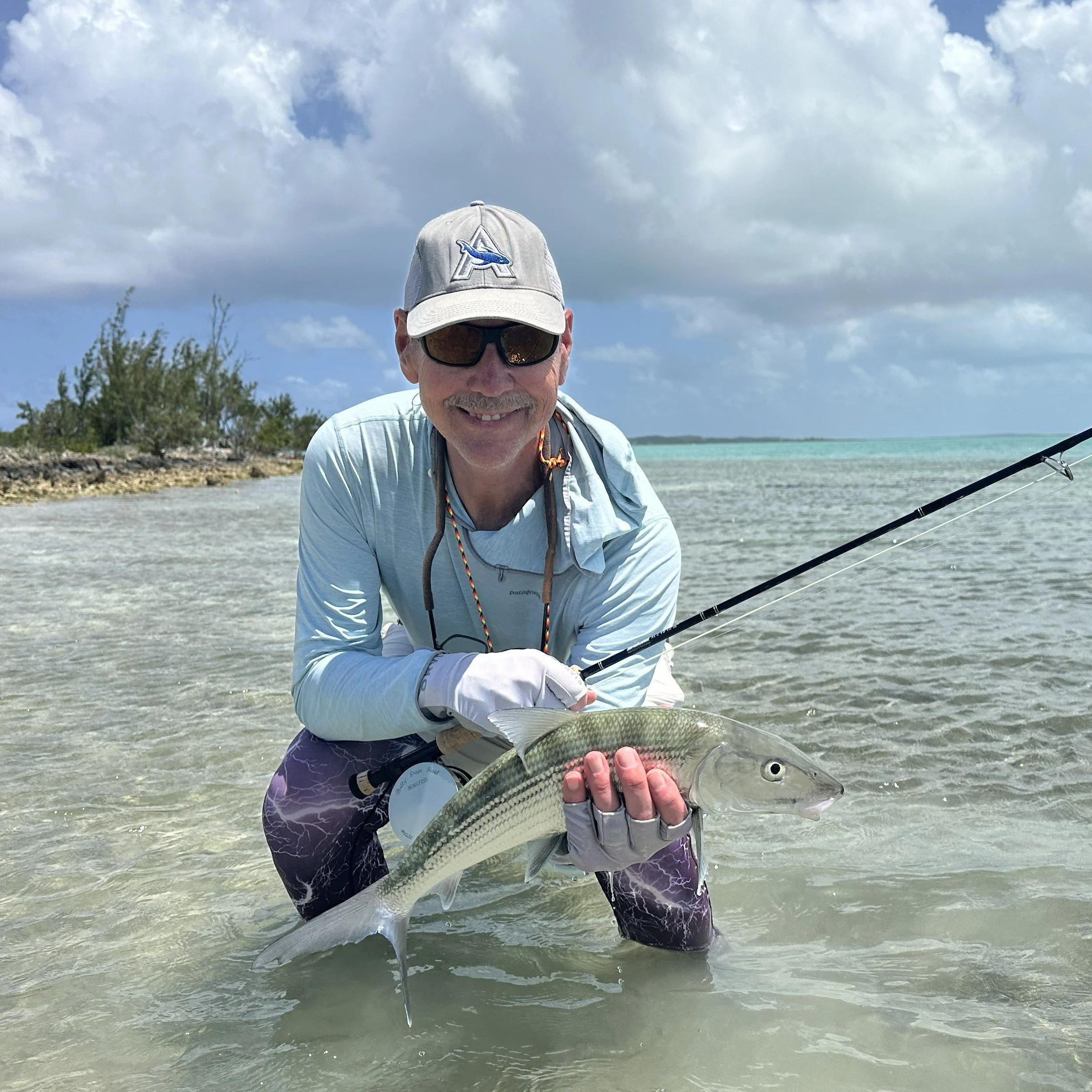
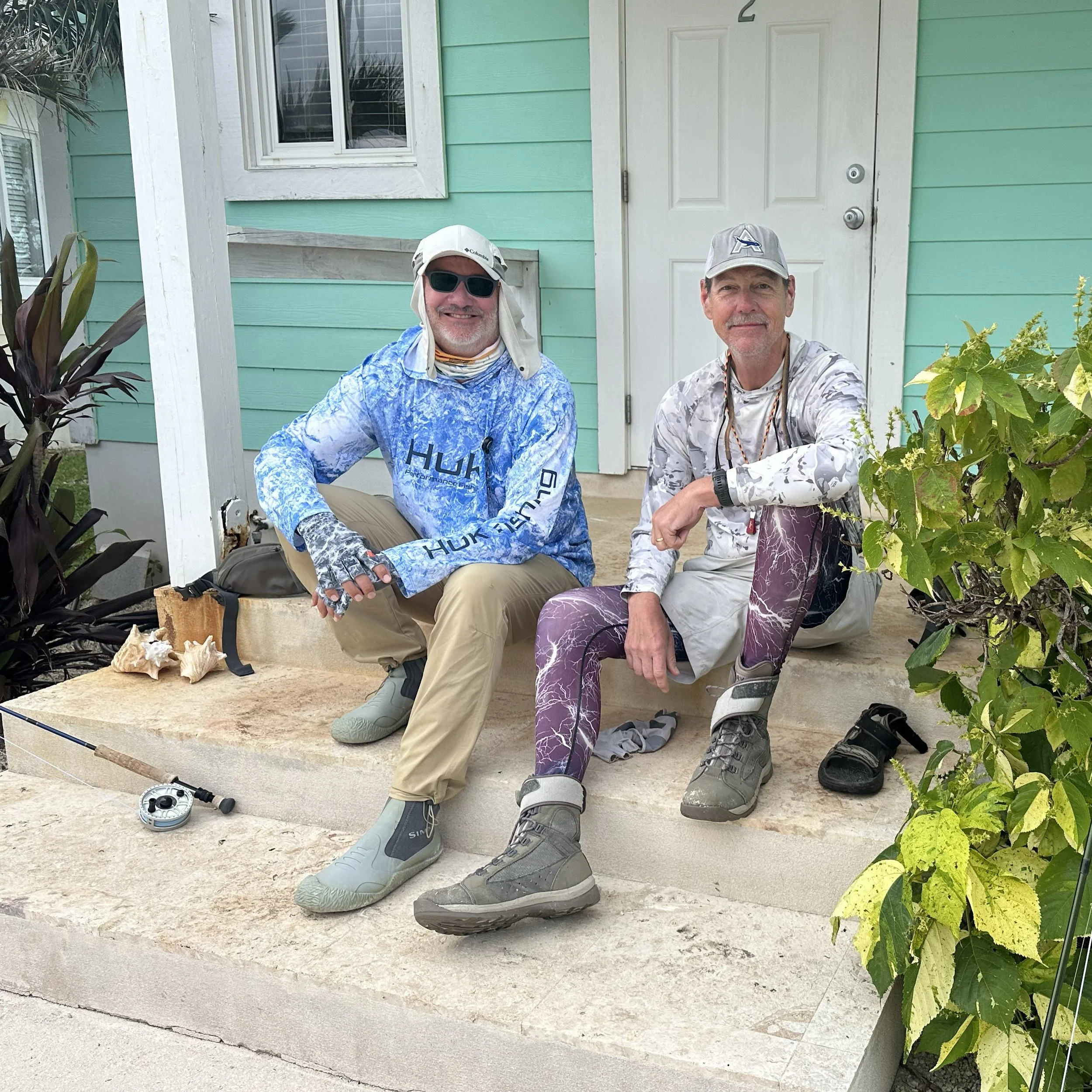
It may be the warm weather and water, perhaps the rum and cigars, but bonefish have become my favorite fly-fishing quarry. After a year’s sabbatical I returned to the Bahamas in April 2026 for an assisted DIY bonefish adventure—my fifth trip for bonefish and my first to Deadman’s Cay on Long Island. It was all I expected and more, and I plan to return.
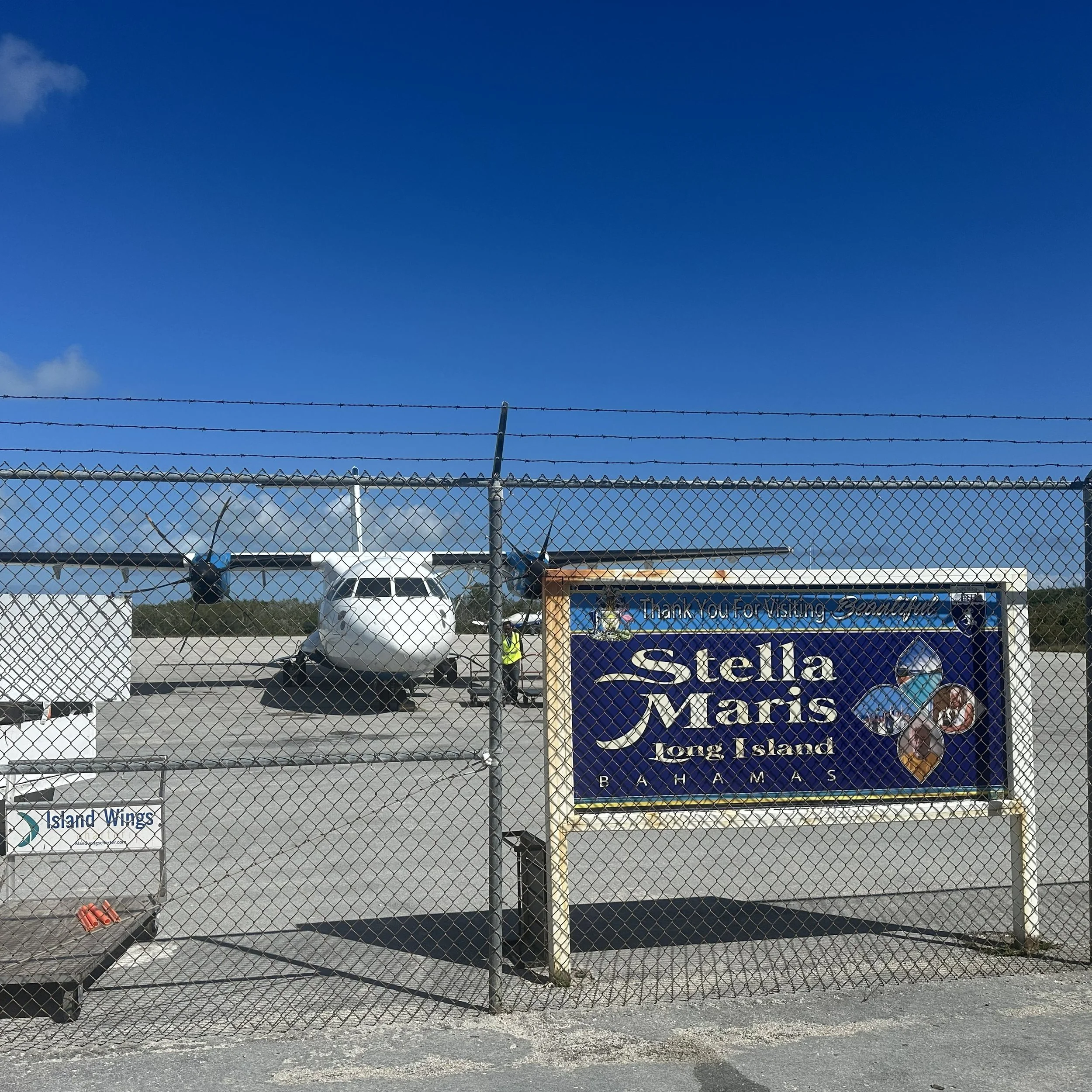
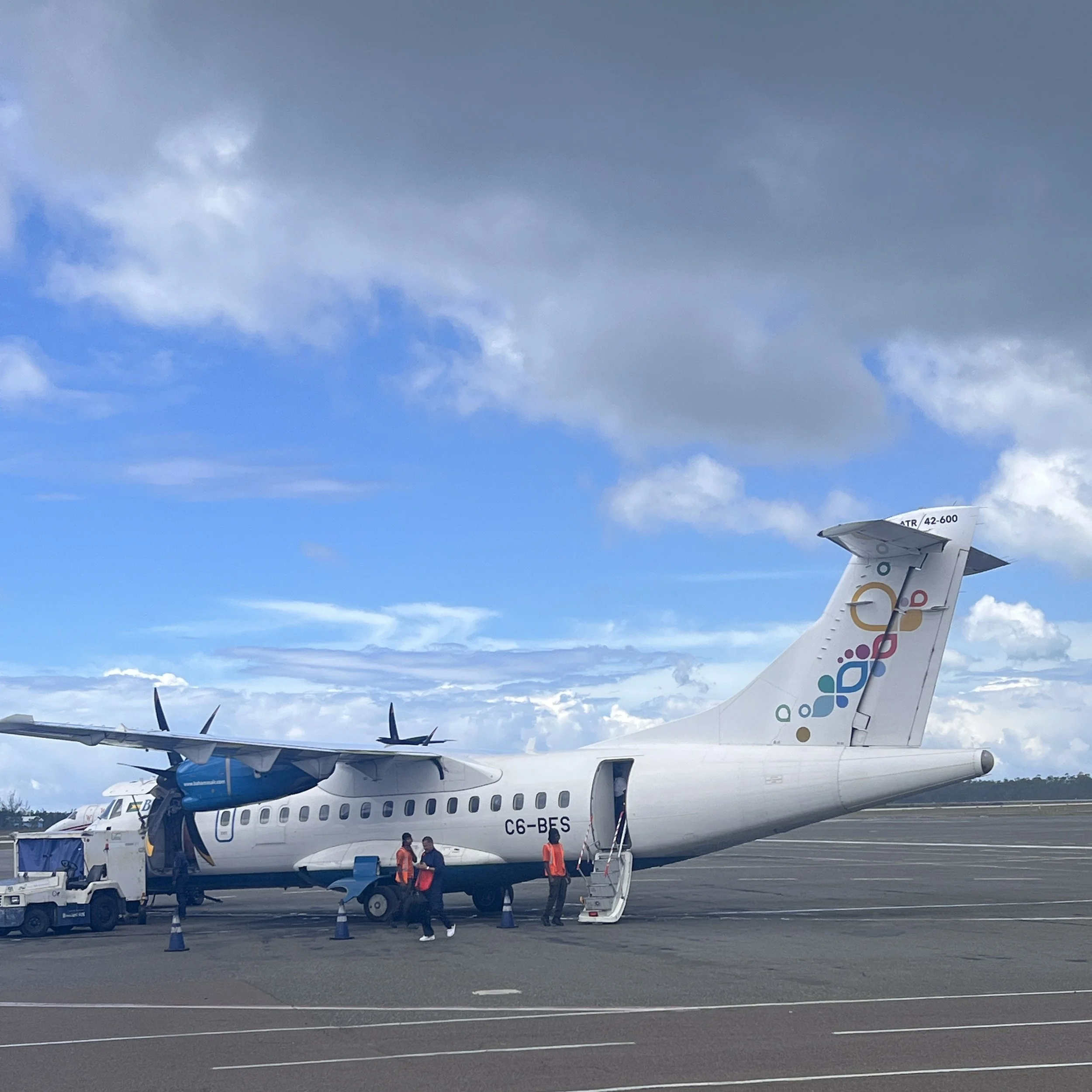
My partner-in-crime, Tony, and I fished out of the Long Island Bonefish Lodge outside Deadman’s Cay, in the center of the island. Long Island is about 80 miles (130 km) long and only 4 miles (6 km) wide at its broadest point. It is bisected by the Tropic of Cancer, considered one of the “Out Islands,” and a one-hour flight south of Nassau.
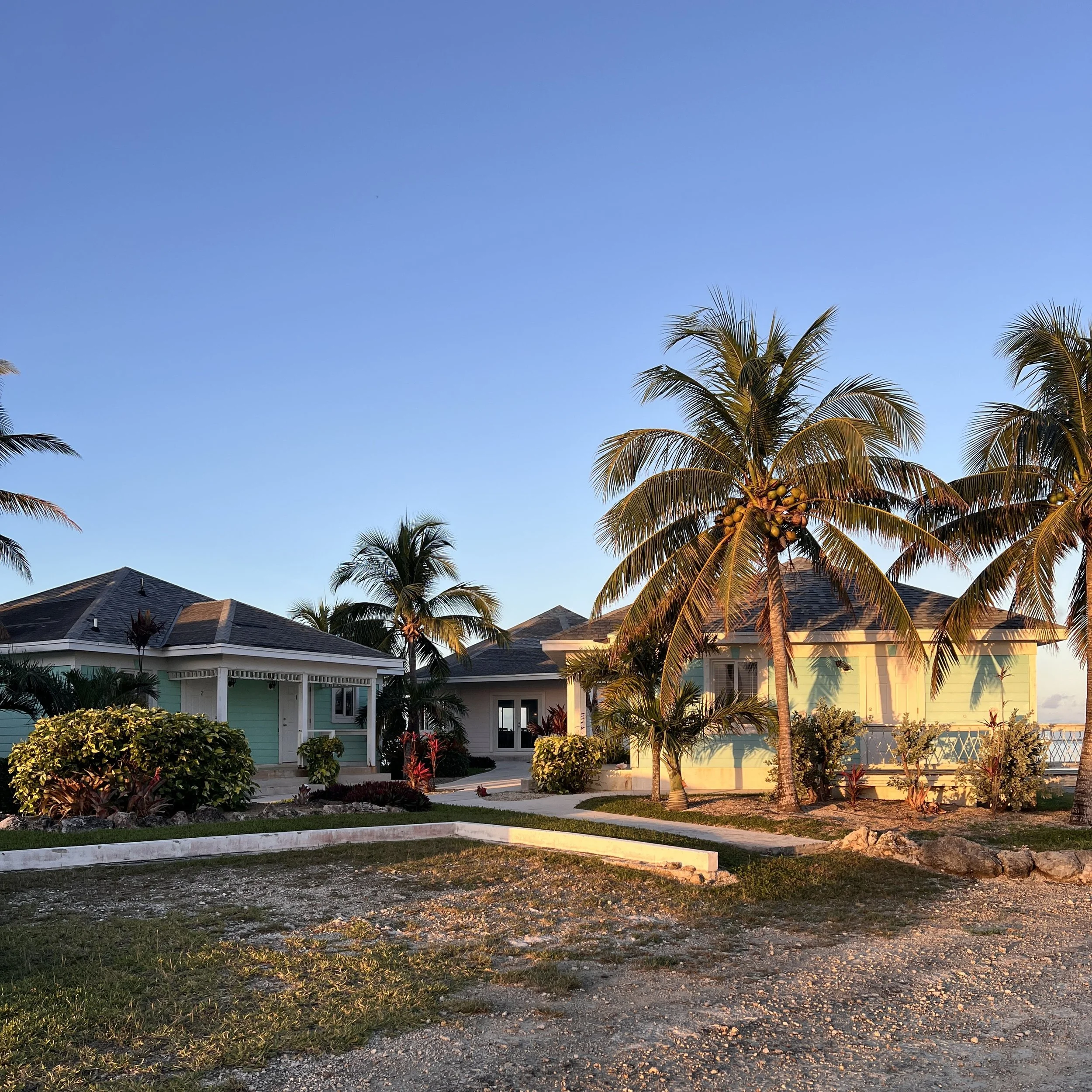
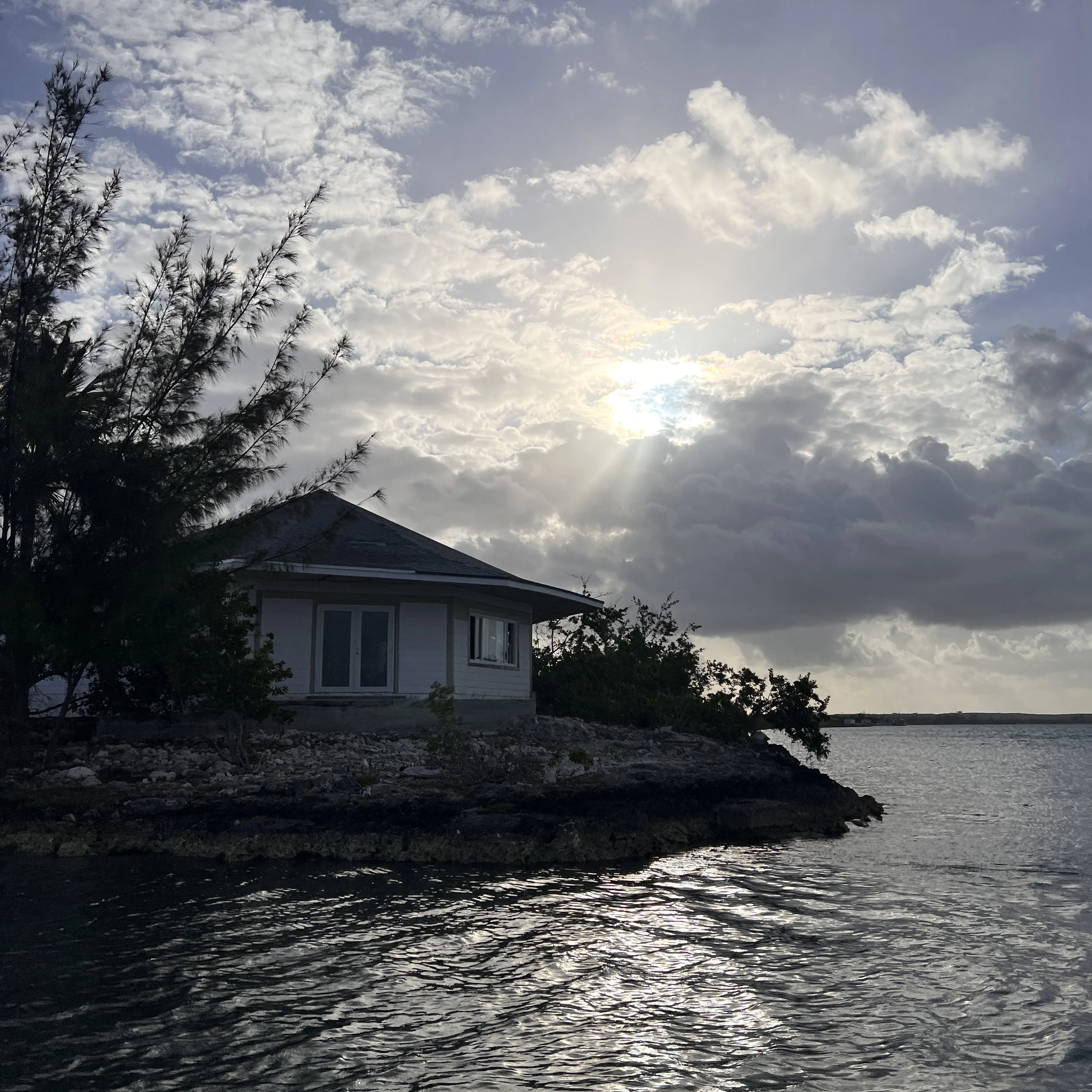
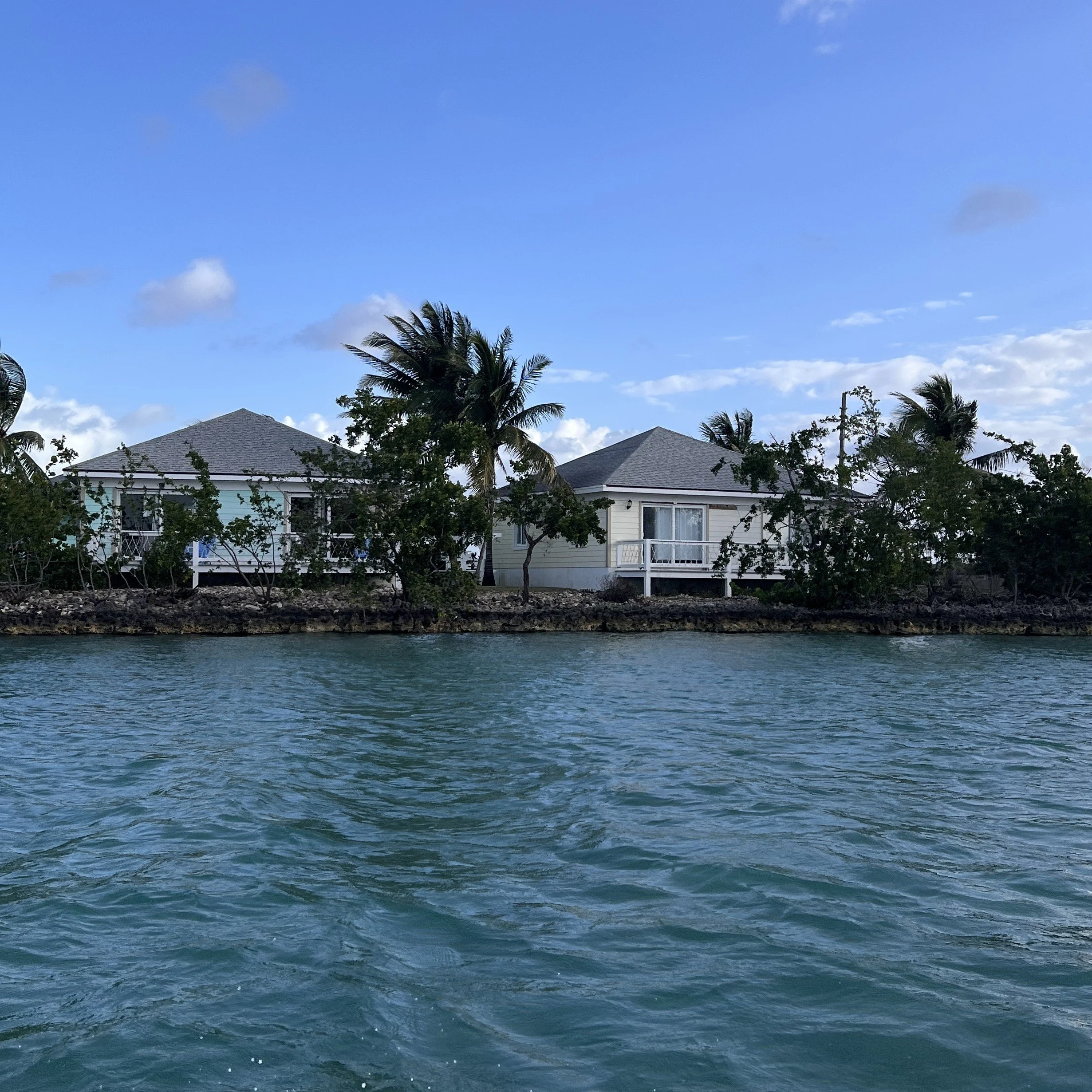
Long Island Bonefish Lodge is a small boutique operation specializing in assisted DIY bonefish adventures. They host up to six guests per week in three full-service waterfront cottages with stunning nightly sunsets. The staff and meals were outstanding.
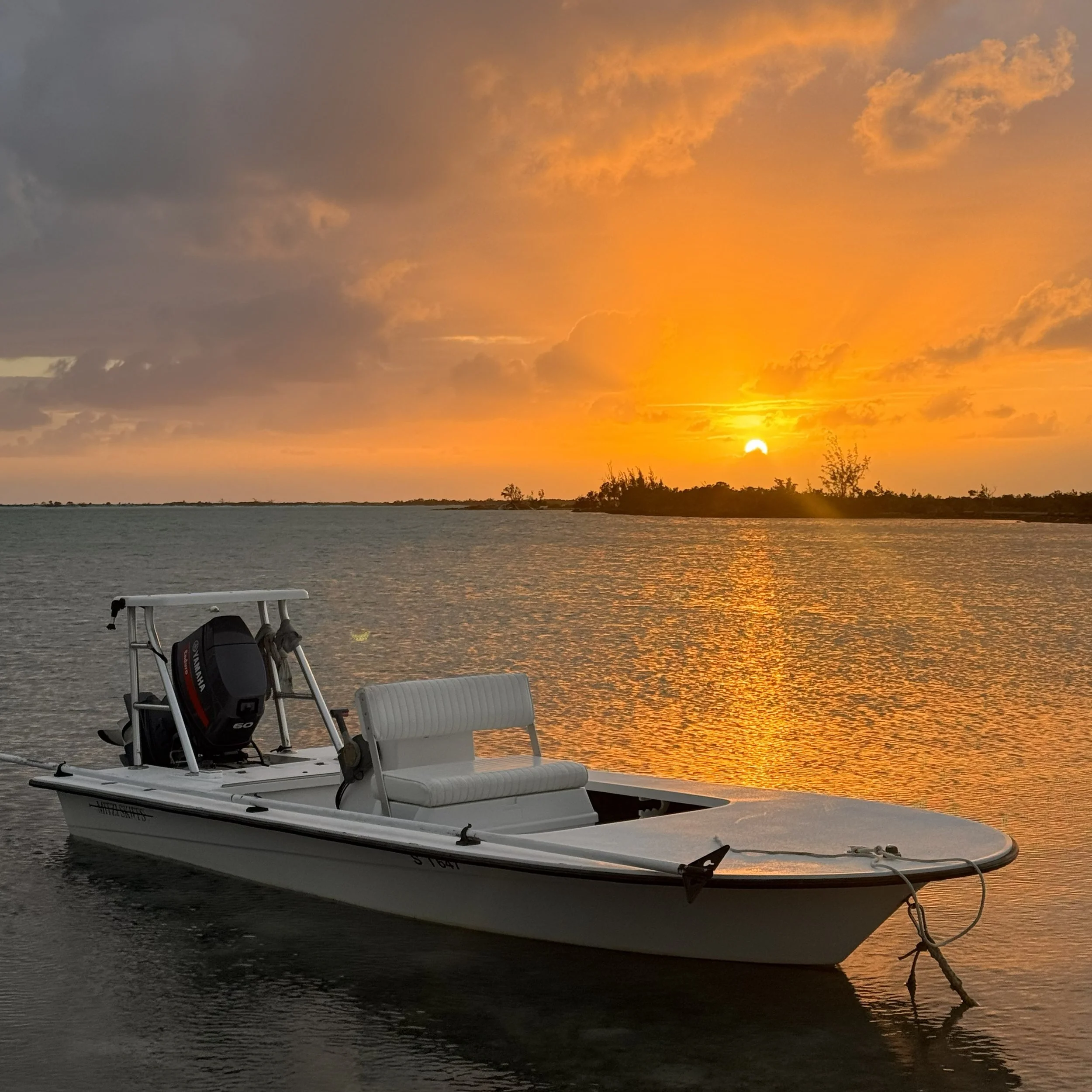
Assisted DIY means the lodge dropped us on the flats each morning in a Mitzl skiff and picked us up in late afternoon. We were largely left to our own devices, but veteran guide Neil Knowles consistently put us on productive water and offered sage advice. I learned a lot from him.
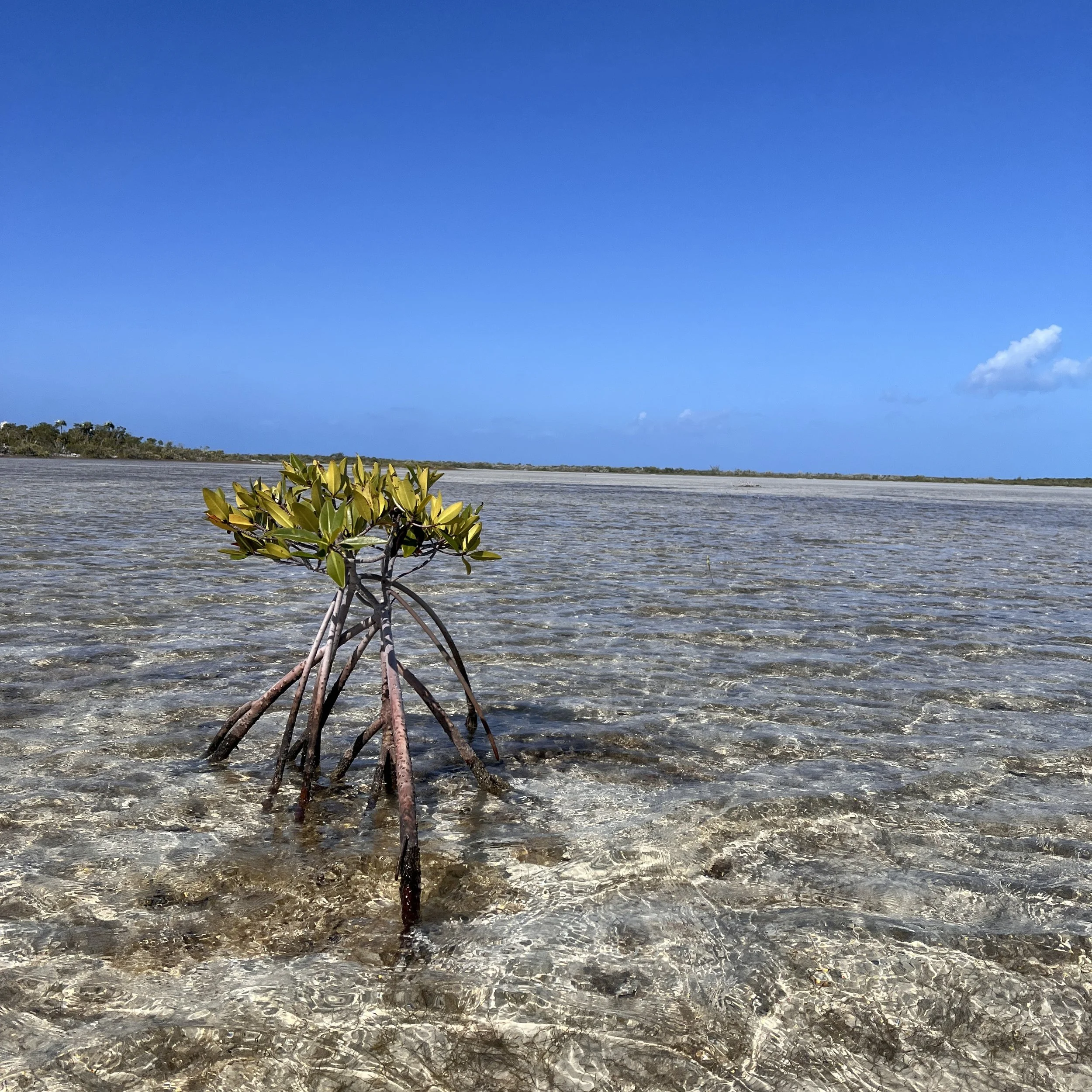
The flats of Long Island are vast. We mainly fished the “salt ponds” and adjacent backcountry, remnants of the industrial-scale solar salt operation once run by Diamond Crystal Salt. The company went bankrupt and abandoned the site in 1982; since then, storms, hurricanes, and tides have steadily reclaimed and reshaped the flats. Perfect bonefish habitat.
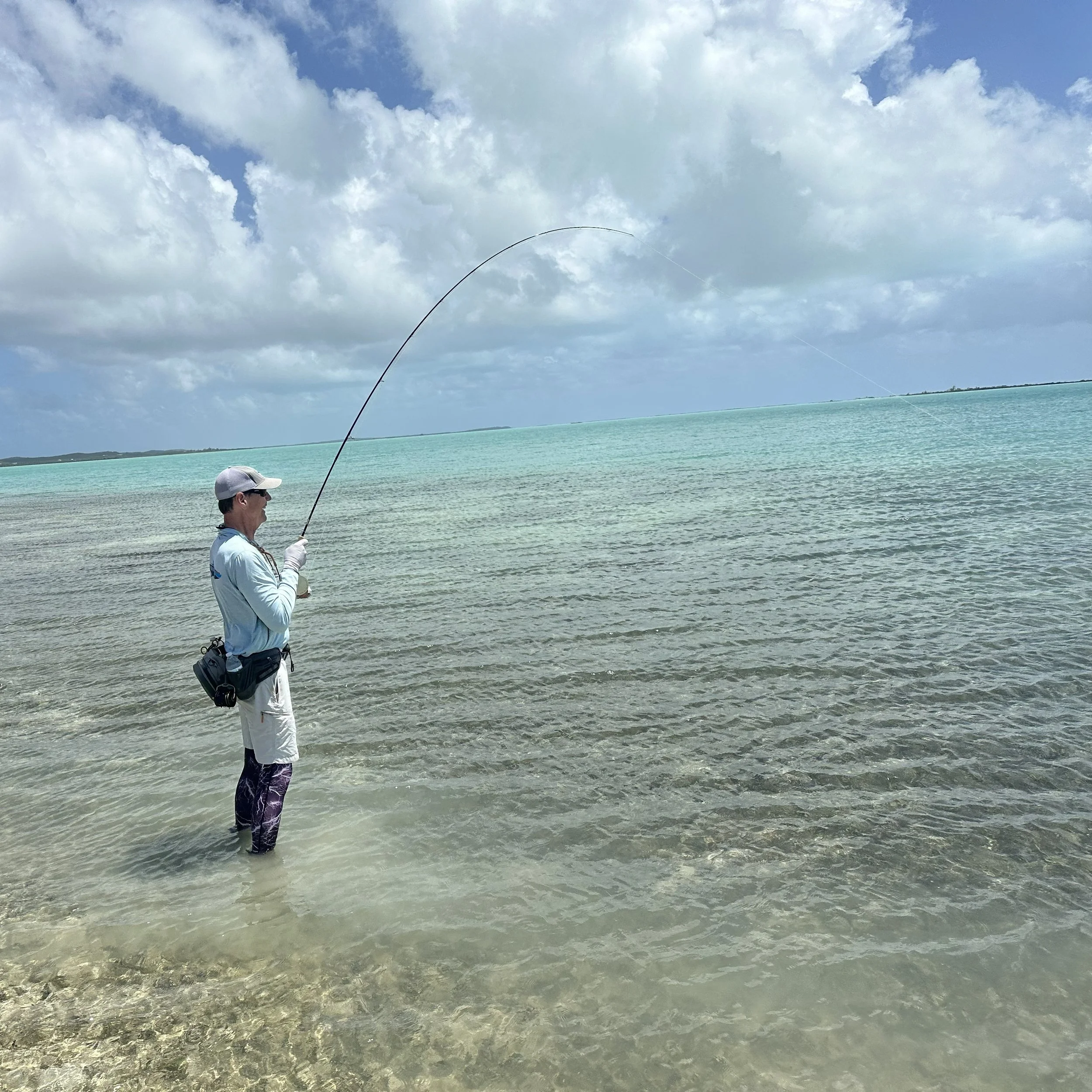
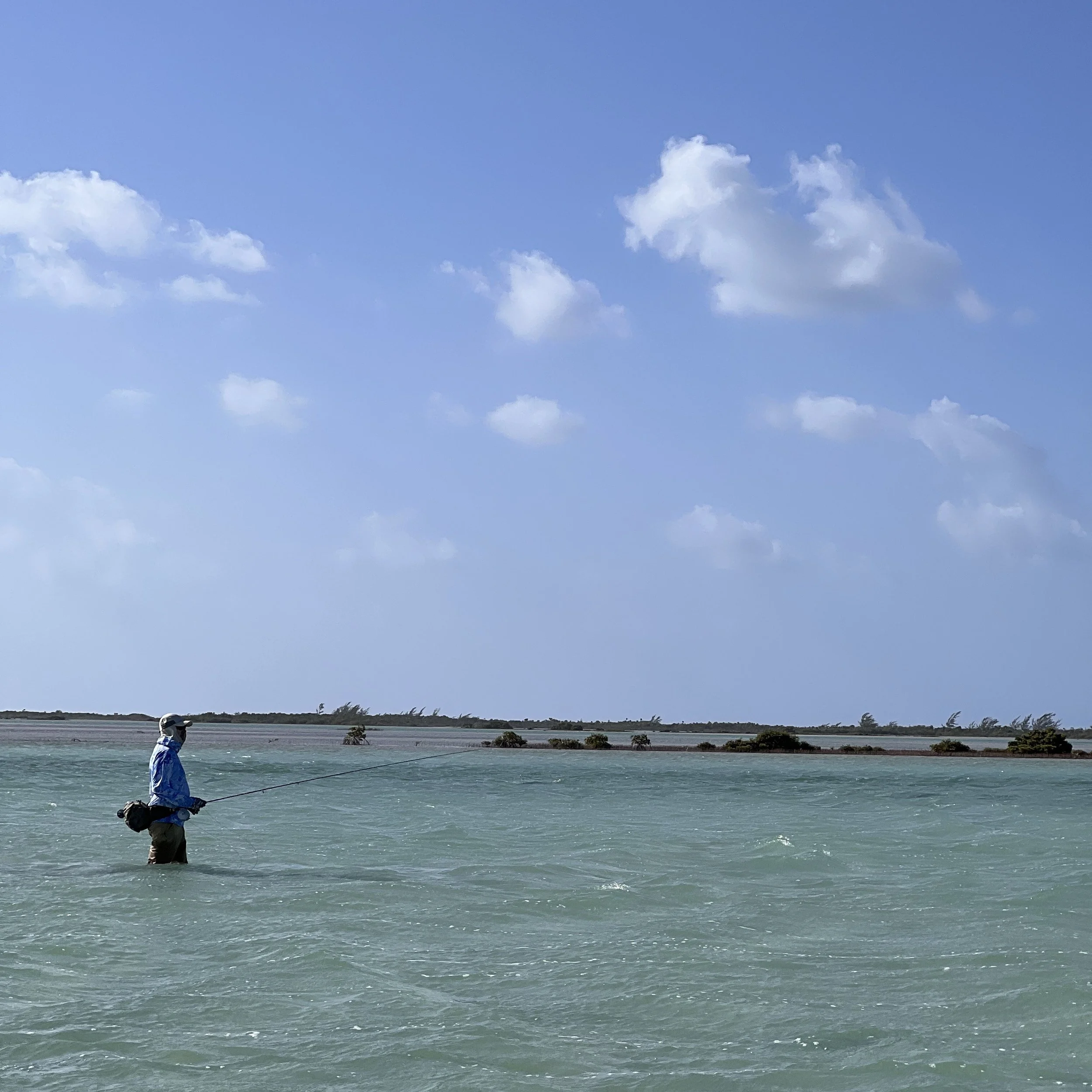
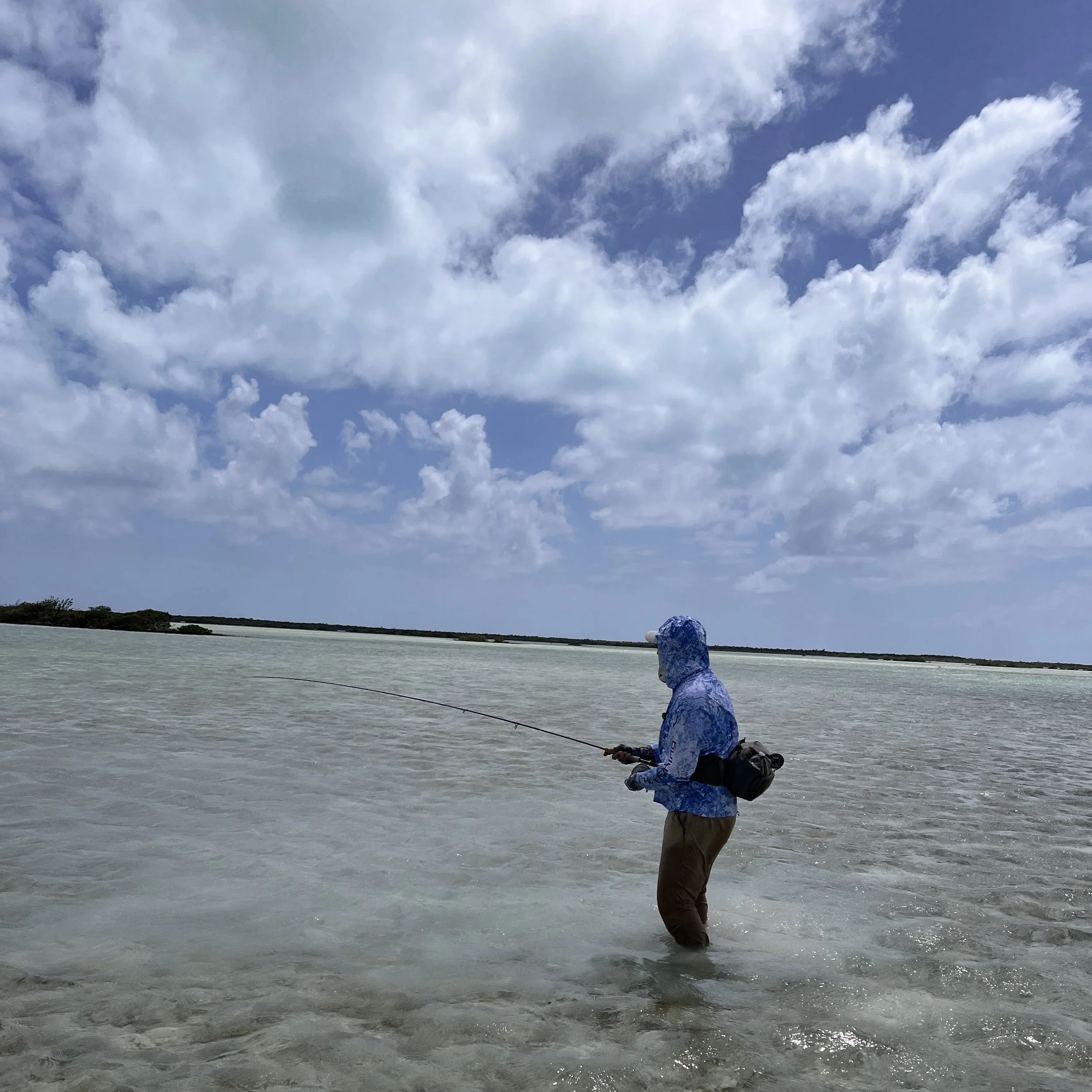
First, bonefish are unlike any other species I have pursued with a fly rod. It is more like hunting: stalking acres of flats, lying in wait, and taking your shot. If you connect and bring one to hand, it is great fun.
Second, bonefishing on Long Island was very different from my previous trips to neighboring Acklins Island. On Acklins, the flats are small and intimate, and tides strongly influence fish movement as they enter and exit through defined channels. On Long Island, the flats are huge and interconnected and tides seemed to have less influence; fish wandered more freely across the flats. With more time I am sure patterns will emerge, but for now it is simple: find a flat, stalk a fish.
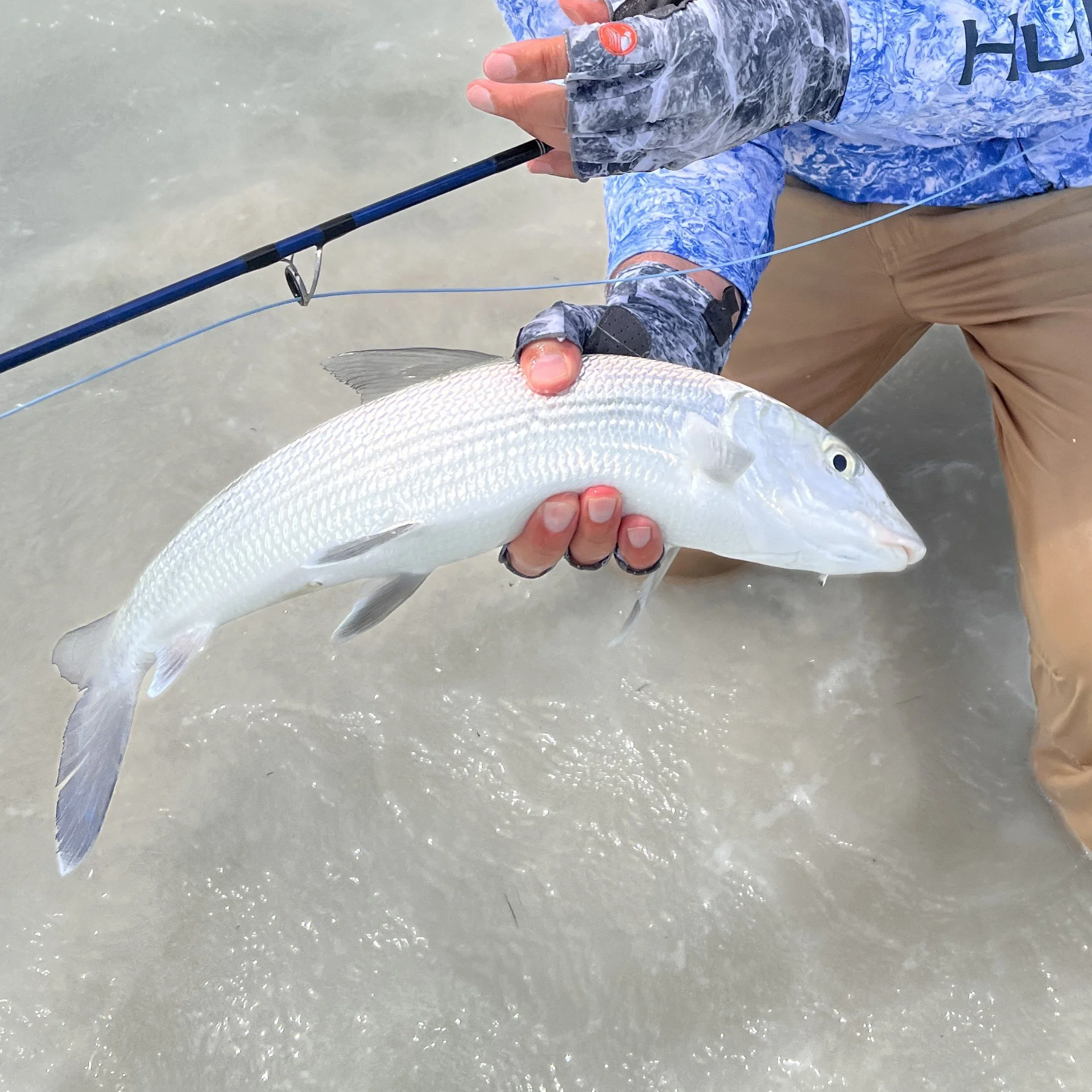
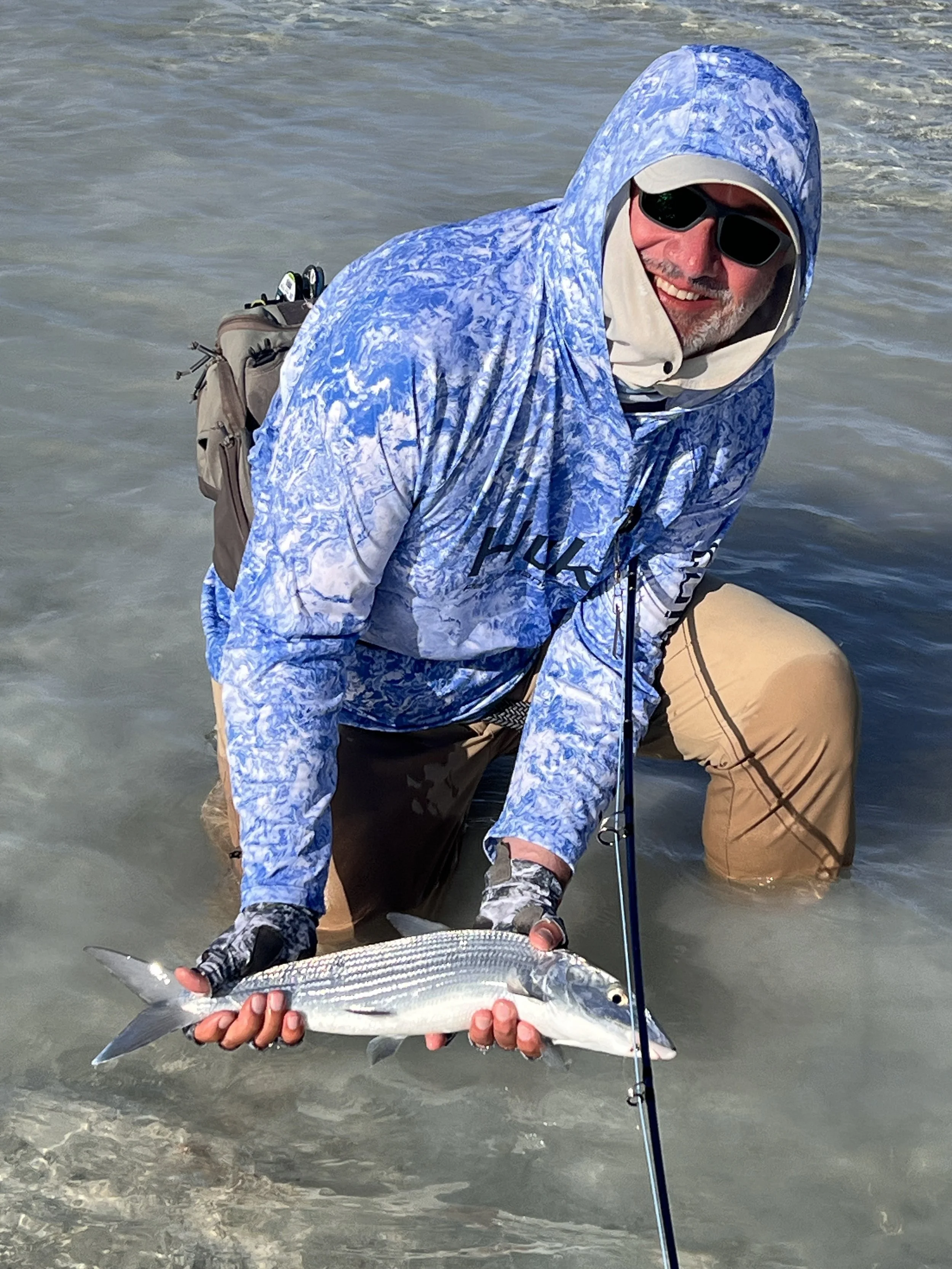
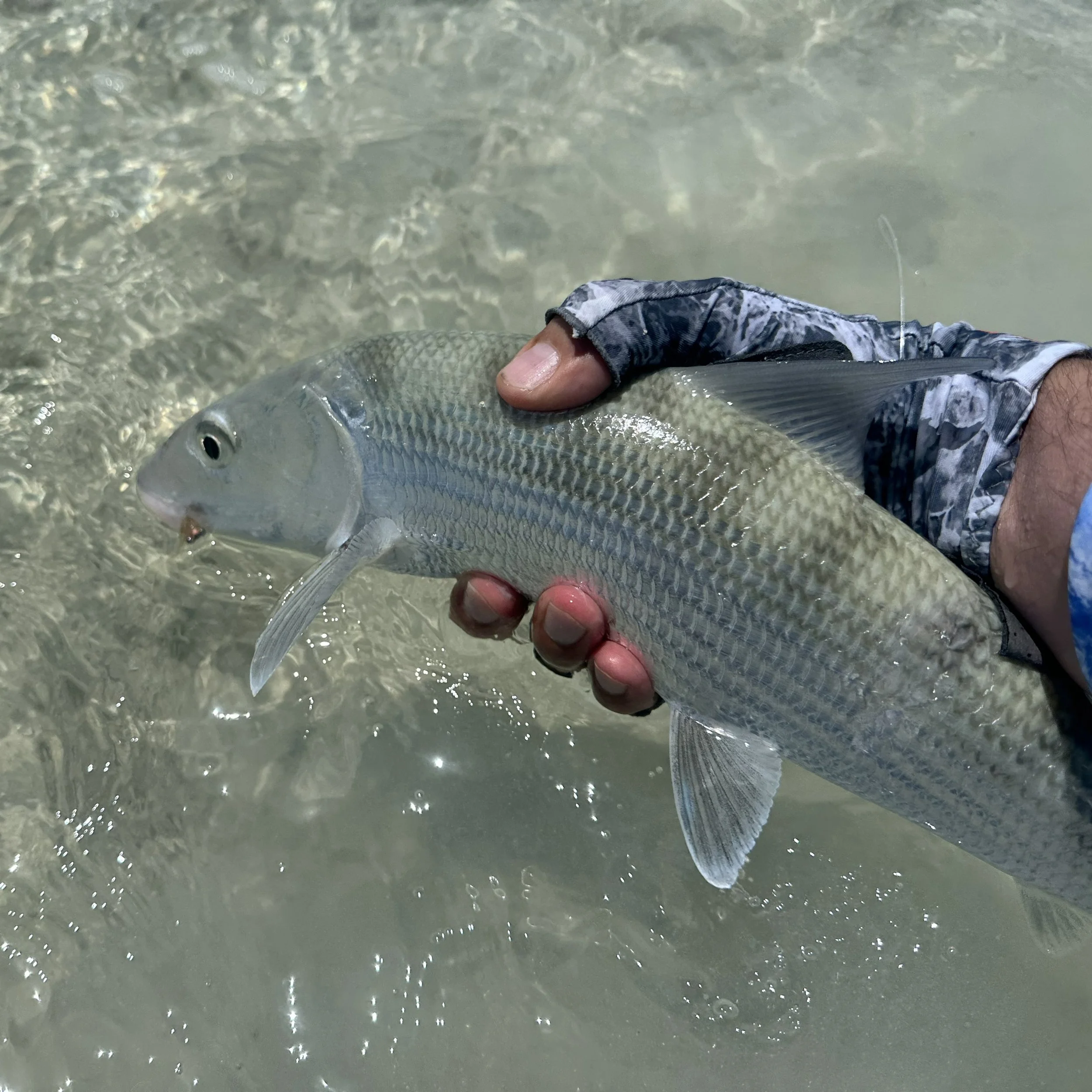
I was unprepared for the size of the fish on Long Island. Bahamas bonefish are known for their large average size, and that held true: most fish we sighted were 16 to 22 in., and we took shots at 24 in.+ fish every day. Fish were usually singles or small groups of three, and the large schools of smaller fish found on Acklins were largely absent. Without that competitive school dynamic, fly presentation and precision become even more important.
We also found Long Island bonefish very wary and easily spooked, requiring longer, lower stalks and longer shots. I lost count of how many large singles bolted at 80 yards when I simply raised the rod for a back cast. The fish also seemed to prefer smallish flies (sizes 8 to 10) with small bead-chain eyes; anything with an “over-sized splash” was like firing a starter’s pistol.
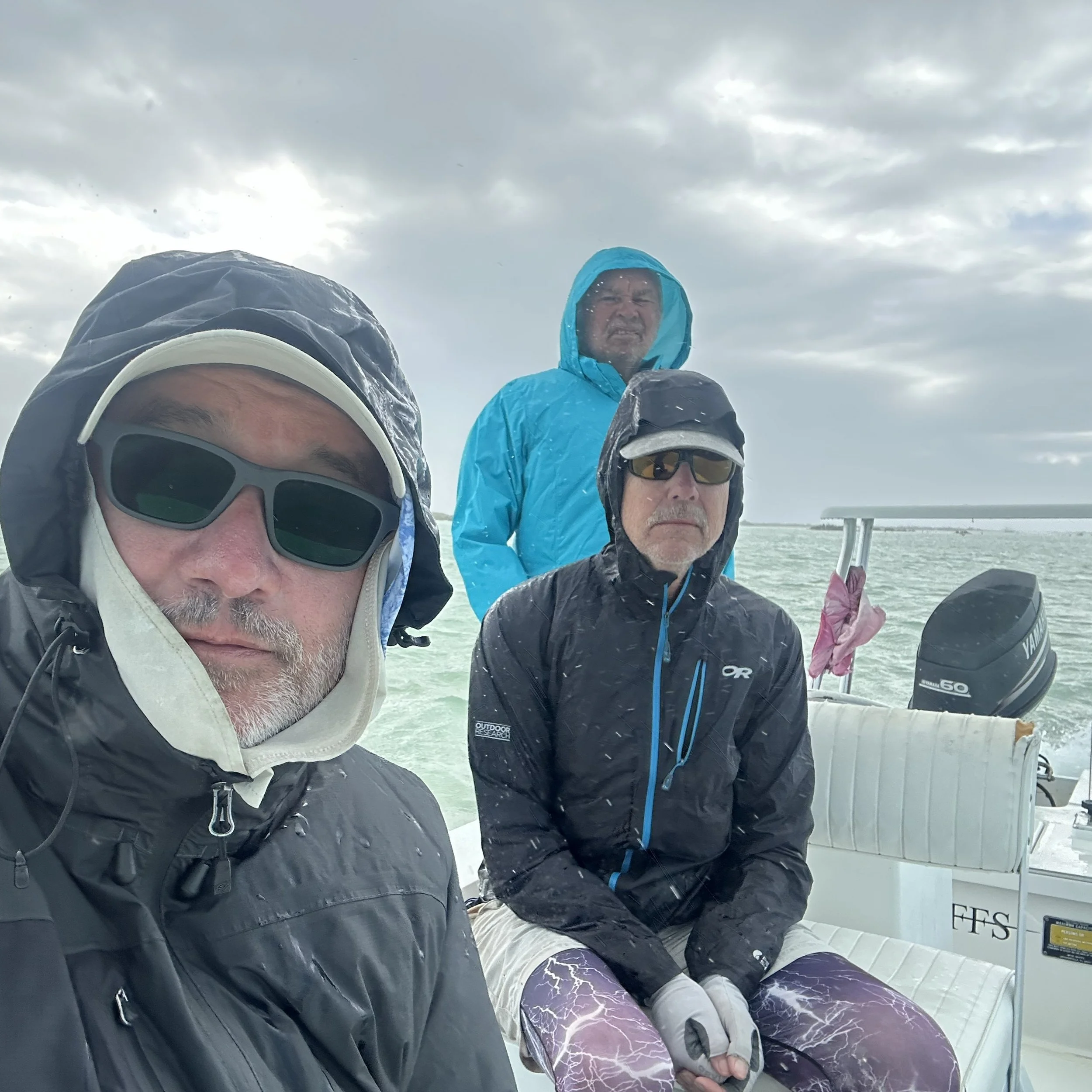
The weather was a challenge: 20 to 25 mph winds on four of the six days. Trying to cast a 60-yard off-hand cast to a bonefish into a 25 mph cross breeze is, in a word, hard. On another day, cloud cover made it hard to spot fish and we were “stepping on” them as we crept across the flats. We each sighted, generally, 20-plus fish a day, but fish to hand were hard to come by. One memorable day I hooked three fish over 20 in. and couldn’t keep any of them on.
But on the afternoon of day six it all came together with light winds, mostly sunny skies, and big bones in five inches of water on hard sand. Three 20 to 22 in. fish pounced on my size 10 Gotcha with a dark mallard wing. The fish buried their noses in the sand with tails in the air, and then it was off to the races—screeching runs that ripped deep into the backing.
Classic stuff—and why I will be back.